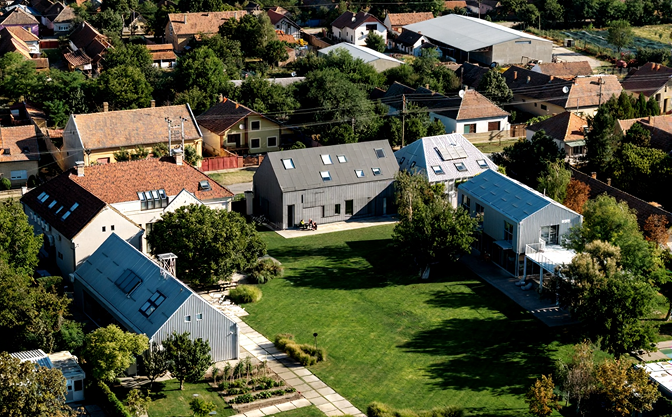
There’s a village in the far north of Serbia where stories are not only told—they’re lived. Mokrin, a place where time slows and tradition breathes, is home to not one, but two world championships.
Not the kind with medals and million-dollar sponsors, but the kind that echo with laughter, rivalry, and the warmth of a thousand shared memories.
Here, on the flat plains of Banat, eggs and geese reign supreme—and the locals wouldn’t have it any other way.
The Clash of Shells: A Battle of Easter Morning
Each spring, just as the fields begin to green and the scent of fresh earth hangs in the air, the villagers of Mokrin gather for what might be the most important event of the year: the Tucanijada.
It’s not just a game. It’s a ceremony, a rite, a duel of faith and folklore.
The rules are simple: one egg must break, and one must remain whole. But beneath that simplicity lies a web of strategy, superstition, and generations of egg lore.
Families guard their techniques like sacred texts—some swear by a certain breed of chicken, others by the phase of the moon when the egg was laid. There’s even talk of whispering to the eggs, breathing strength into their shells.
On Easter morning, under watchful eyes and with the smell of bread and incense in the air, champions are born.

And once, not so long ago, a woman—Ivana—cracked her way into history, shattering more than just eggs. She shattered a tradition dominated by men, and did it with grace, grit, and a perfectly chosen egg.
The Goose Kings of Winter
But the legend of Mokrin does not end in spring. As the cold creeps in and the fog hugs the fields, the villagers turn their eyes to another kind of warrior. Towering, feathered, fierce—this is the season of the ganders.
Gusanijada is not for the faint of heart. It’s the time when geese fight not with blood, but with instinct and elegance.
The dominant ganders—proud and primal—meet in the ring not to destroy, but to rule. Their handlers, part breeders, part whisperers, stand at the edges, eyes sharp, hearts pounding.
There is a strange nobility to it all. The way the crowd hushes before the first charge. The way the geese puff their chests and strut with the swagger of seasoned champions.
The best ones? They become legends. They get names, songs, maybe even a nickname that sticks long after their feathers have settled.
Where the Old Ways Still Sing
You don’t just watch these events—you feel them. In the laughter of children who don’t yet know the rules but already sense the magic.
In the proud eyes of elders who’ve seen it all, yet never miss a single Easter morning or winter match.
Mokrin’s two championships aren’t just traditions—they’re love letters to a way of life that refuses to fade.
In a world obsessed with speed and screens, here lies a corner of earth where eggs are tested, geese are cheered, and stories grow taller with each retelling.
Tucanijada & Gusanijada, Mokrin
Because in Mokrin, the world championships aren’t about trophies. They’re about memory. About belonging.
About the quiet knowledge that somewhere, on a field in northern Serbia, legends are still being made—one egg and one goose at a time.